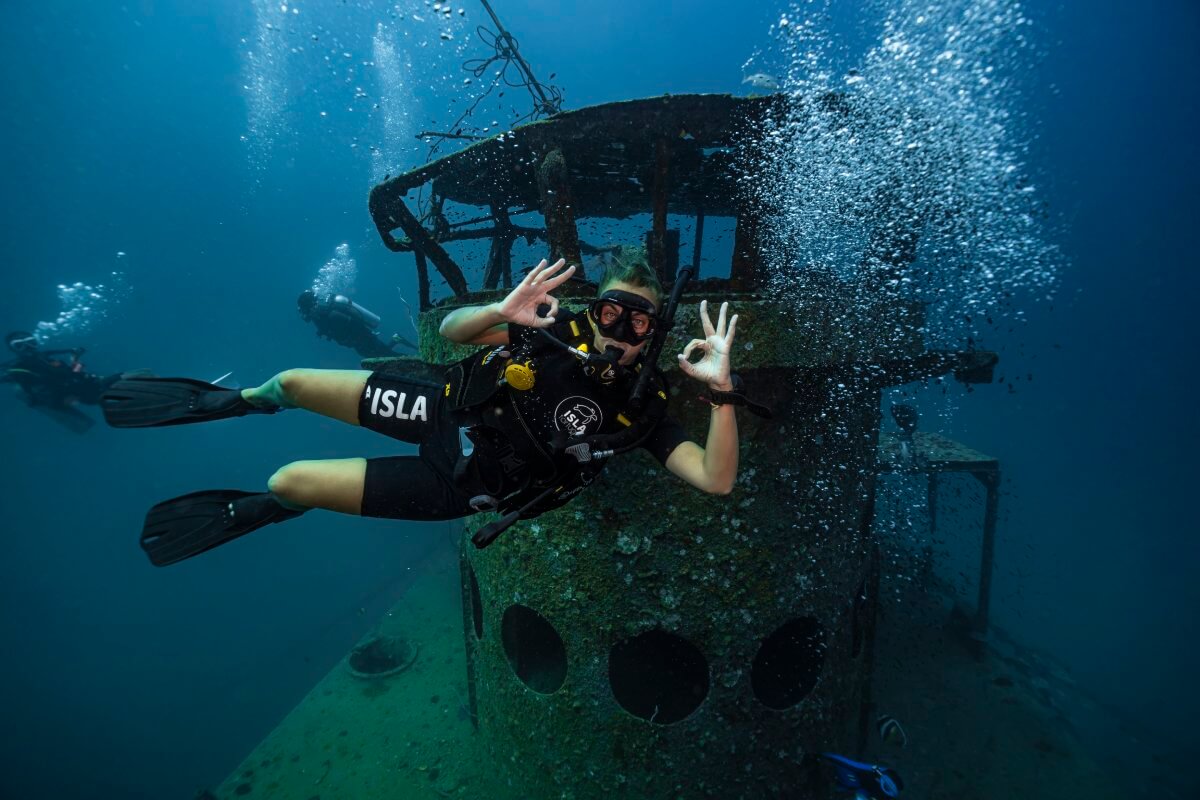
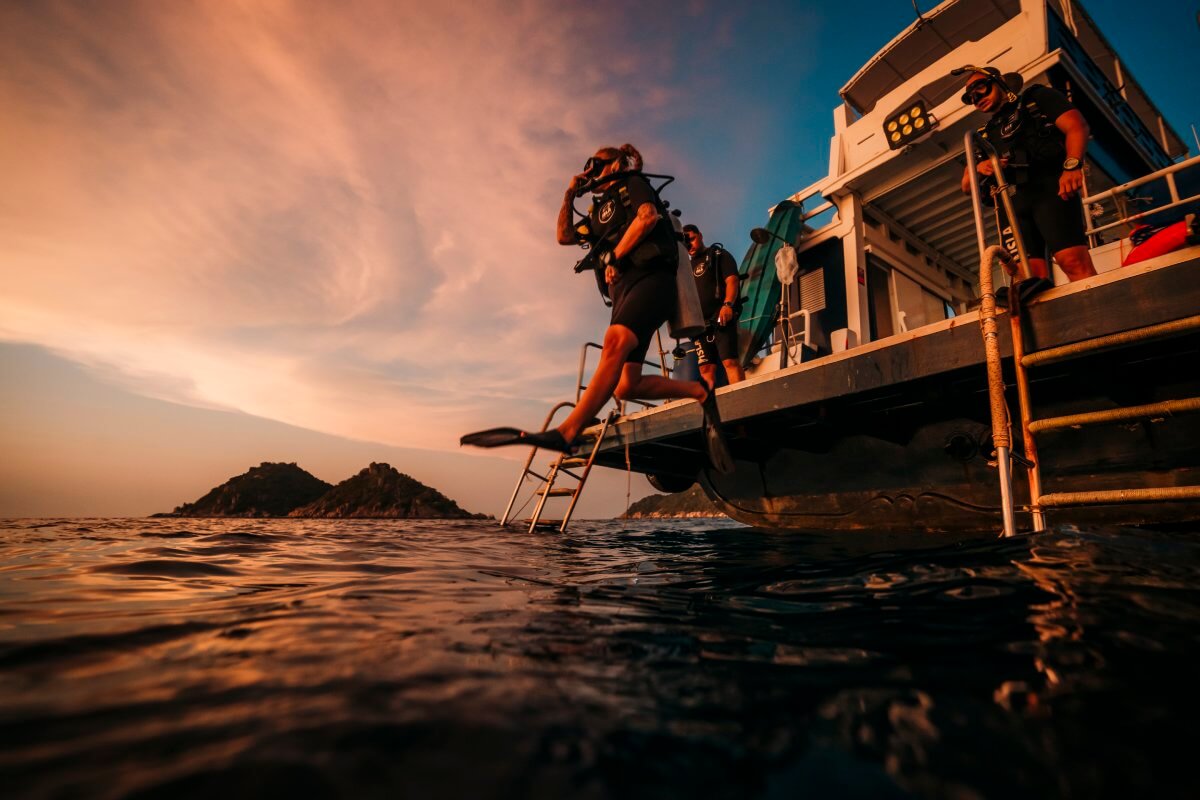
There is a moment that every diver remembers: the one where they step off the back of a boat in complete darkness, take a breath, and descend into the black. It sounds intimidating. It sounds like exactly the kind of thing a perfectly rational person might decline.
And yet, within minutes of that first night dive, almost every diver who has ever done it says the same thing: why did I wait so long?
Night diving in Koh Tao transforms how you see the underwater world. The reef you dived that same morning looks nothing like it does after sunset. Different creatures have taken over, the corals are open and feeding, and the water glows with a light of its own.
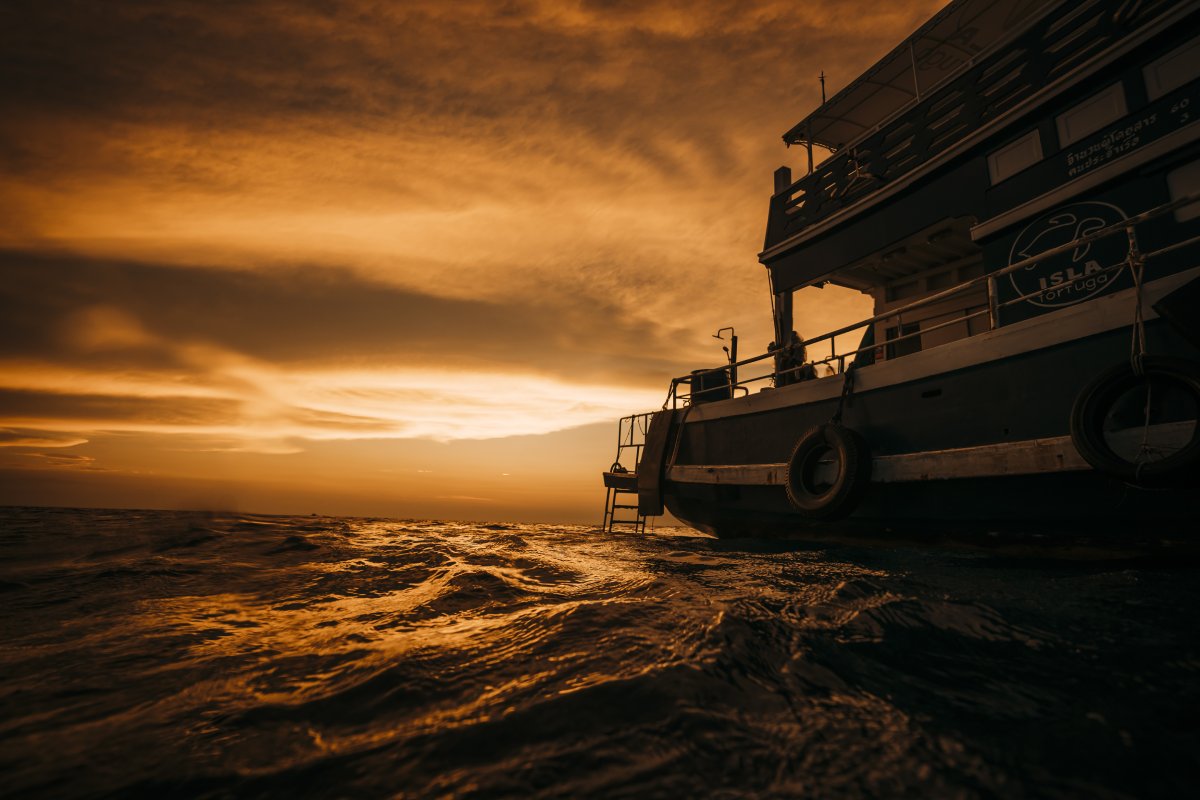
At Isla Tortuga Divers we run night dives throughout the year, primarily at White Rock on Koh Tao’s west coast — the island’s most celebrated night dive location. This guide covers everything you need to know before you go.
First Night Dive in Koh Tao: What to Expect Underwater
The first thing most divers notice is color. During the day, sunlight filters through the water column and strips out the red and orange spectrum at depth, leaving the reef in muted blues and greens.
Your torch restores the full palette instantly — corals that appeared brown at fifteen metres suddenly burn in vivid reds and oranges, Christmas tree worms spiral open in electric blues, and sea anemones pulse in gold and white.
The second thing you notice is the behaviour. Parrotfish are resting, wrapped in mucus cocoons they secrete as protection against nocturnal predators. Daytime hunters like trevally and barracuda use your torch beam to ambush smaller fish attracted to the light. The reef you thought you knew reveals an entirely different version of itself, and it is more alive, not less.
Bioluminescence: The Night Dive’s Secret Wonder
On the right nights — particularly during plankton blooms — White Rock delivers one of the ocean’s most extraordinary phenomena. Wave your hand through the water and it trails sparkling blue-green light.
Exhale and your bubbles rise through a constellation of tiny glowing particles. It cannot be photographed well and it cannot be described adequately. It simply has to be experienced.
Koh Tao’s warm, nutrient-rich Gulf waters provide bioluminescence more reliably than most places in Southeast Asia. If your safety stop at five metres coincides with a bloom event, you may find yourself hovering in glowing water for considerably longer than the required three minutes — and no one will blame you for it.
The Nocturnal Shift: Day Creatures vs Night Creatures
The transition from day to night on a coral reef is a shift change. One set of workers clocks out and another clocks in, and the two teams barely overlap. The daytime marine life residents — parrotfish, butterflyfish, most wrasse species — are resting in crevices or sleeping on the reef floor.
The nocturnal hunters who replace them include giant groupers, moray eels moving freely in open water, octopus prowling rubble patches, and blue-spotted ribbontail rays gliding across the open sand.
Meanwhile, the titan triggerfish that may have chased you off the reef during the afternoon are now docile and approachable, resting on the bottom and entirely indifferent to your presence. The territorial aggression that defines their daytime behaviour simply switches off after dark — one of the more startling transformations a reef offers.
Why Choose Koh Tao for Your First Night Dive
Koh Tao is not just a convenient place for a first night dive — it is genuinely one of the best places in the world to do it. Water temperatures sit between 27 and 30 degrees Celsius for most of the year, currents at the main night dive sites are generally mild, and visibility typically ranges from 10 to 20 metres. These are close to ideal conditions for a first-time night diver.
White Rock, known locally as Hin Kaow, sits just two kilometres from Mae Haad pier. Its two large granite pinnacles provide clear, intuitive navigation — no confusing passages, no disorienting layouts, just reef wall and sandy channels that read naturally under torchlight.
With a depth range of 5 to 20 metres and conditions accessible to Open Water certified divers, it is as good a night dive site for beginners as exists anywhere on earth.
A World-Class Training Environment
Koh Tao has produced more certified divers per square kilometre than almost anywhere in the world, and that concentration of experience shows in the quality of night dive instruction on the island.
At Isla Tortuga Divers, our guides have each conducted hundreds of night dives at White Rock. They know every corner of it in the dark — where the moray eels den, which coral head the octopus has been hunting around this week, where the cleaning shrimp return to each night.
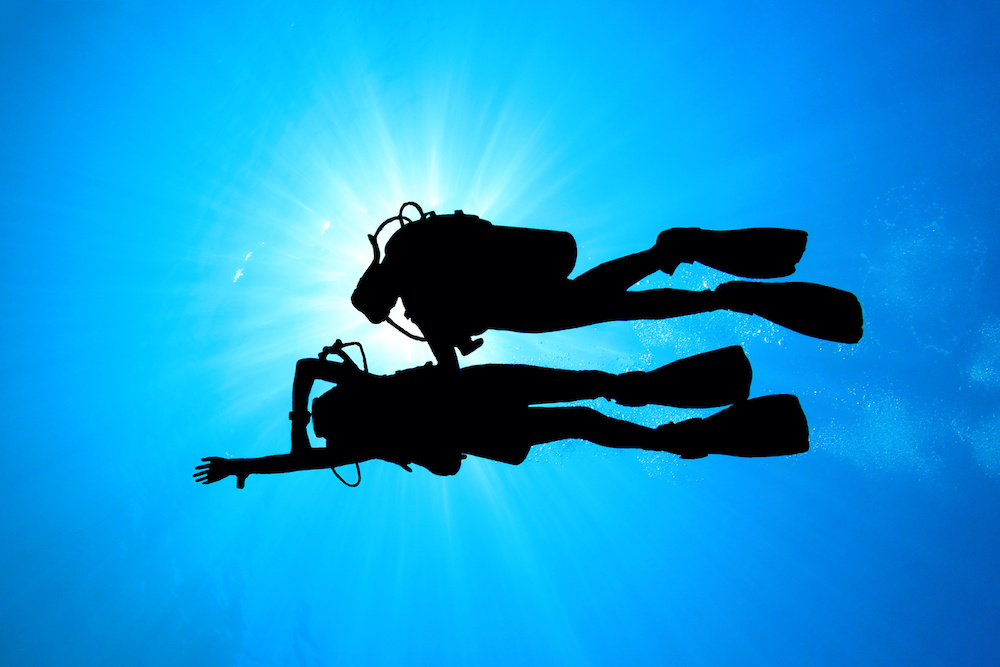
We keep night dive groups deliberately small, typically a maximum of four divers per guide. A night dive with four people and one experienced guide is an intimate, unhurried experience.
The marine life is not disturbed before everyone has had a chance to see it, communication is easy, and your guide has the time and attention to show you things you would never find independently.
Essential Gear for Night Diving
Beyond your standard scuba equipment, night diving requires a small number of additional items. None of it is complicated, but all of it matters.
Primary Torch and Backup Light
Your primary torch is your most important piece of equipment. It illuminates the reef, enables communication with your buddy and tracks your position for the boat crew above.
At Isla Tortuga Divers we provide high-quality primary torches for all night dives. What most people do not realise until they have done a night dive is that torch technique matters as much as torch quality — moving it slowly and deliberately allows marine life to stay calm and gives your buddy time to look at what you are pointing at.
A backup or secondary light is not optional. Primary torches fail, even well-maintained ones, and finding yourself in complete darkness at depth mid-dive is an experience a small clip-on light completely prevents.
We strongly recommend renting or bringing your own backup. A small marker light attached to your tank valve also helps your instructor and buddy identify your position instantly in a group where multiple torch beams are moving in different directions.
Wetsuit and SMB
A full 3mm wetsuit is recommended for night diving in Koh Tao year-round. Even in warm months, spending extended time at depth feels cooler than a daytime dive of the same length, and a full suit protects against jellyfish which are more prevalent near the surface at night and essentially invisible until they make themselves known.
A Surface Marker Buoy (SMB) is standard equipment on every dive but becomes particularly important at night. A brightly coloured inflatable tube deployed at the surface marks your ascent position to the boat crew and to any passing vessel.
Deploying your SMB, ascending under it and being collected in an orderly manner is the clean, professional way to finish a night dive.
Understanding Underwater Visibility at Night
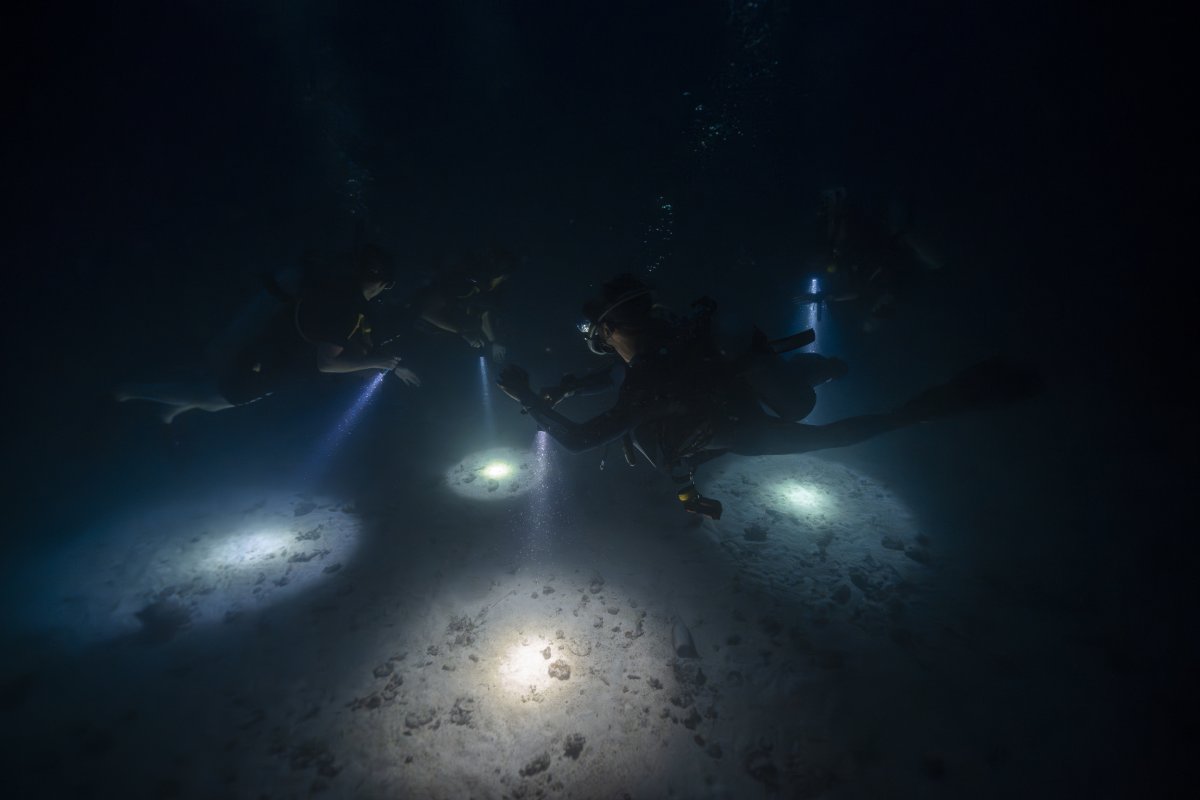
Your primary torch illuminates a vivid cone of water in front of you. Within that cone, visibility is often better than during a daytime dive at the same depth — your light is bright, direct and unfiltered. Colours are saturated, detail is sharp, and creatures that camouflage themselves effectively against ambient daylight are suddenly, brilliantly revealed.
Beyond the cone, it is dark. This narrowing of your effective visual field is actually one of the most valuable things night diving teaches you. It forces you to look carefully at what is directly in front of you.
The creatures you find under careful torchlight are often things you have passed a dozen times without noticing by day — a mantis shrimp in a sand burrow, a frogfish perfectly camouflaged against a coral head, a Spanish dancer nudibranch unfurling its flame-coloured mantle on a nightly patrol.
Visibility by Season
Water clarity at White Rock varies by season. During the dry season from February to May and the transitional months of September and October, visibility is typically 15 to 20 metres — excellent conditions for a first night dive.
During the windy season from June to August, surface conditions on the west coast can occasionally stir up some sediment and reduce clarity slightly.
Even on a modestly clear night at White Rock, the marine life encounter is so close and so direct that overall visibility matters far less than it would on a daytime dive. You are not scanning the middle distance for pelagics — you are within a metre of whatever you are looking at, lit by a torch beam that reveals every detail.

Marine Life You May Encounter
White Rock’s nocturnal roster is one of the most reliable and varied on the island. The blue-spotted ribbontail rays that spend the day buried under sandy patches cruise freely across the open bottom.
Giant groupers move through the reef on deliberate nightly patrols. Moray eels hunt in open water with a fluid, muscular grace.
Octopus — arguably the most intelligent encounter the reef offers — move rapidly across rubble, changing colour and texture in real time as they navigate their environment.
Crustaceans emerge in force after dark. Slipper lobsters, banded coral shrimp, hermit crabs and the ferociously coloured mantis shrimp all appear once the daylight hunters have retired.
For macro photographers, a night dive at White Rock often delivers more close-up subjects in a single session than three daytime dives at the same site combined.
The Occasional Highlights
Some encounters at White Rock are rare enough to make them genuinely exciting when they occur. The Spanish dancer nudibranch — a large, flame-red gastropod that undulates across the reef in dramatic rippling movements — is almost exclusively a night dive sighting.
Banded sea kraits, Koh Tao’s graceful black-and-white sea snakes, occasionally make an appearance. Cuttlefish, rippling colour patterns across their skin as they hunt, transform a good dive into a great one.
These are not guaranteed encounters, and that is precisely what makes them valuable. A night dive at White Rock with an open torch beam and no fixed expectations has a way of delivering exactly the thing you were not anticipating.

Safety Tips for Your First Night Dive
Night diving is safe when conducted properly. These are the principles we apply on every night dive at Isla Tortuga Divers.
Before the Dive
Run your full pre-dive buddy check while there is still sufficient light to do it properly. Confirm tank pressure, BCD inflation, weight configuration and regulator function on the surface rather than sorting equipment in the dark on the boat.
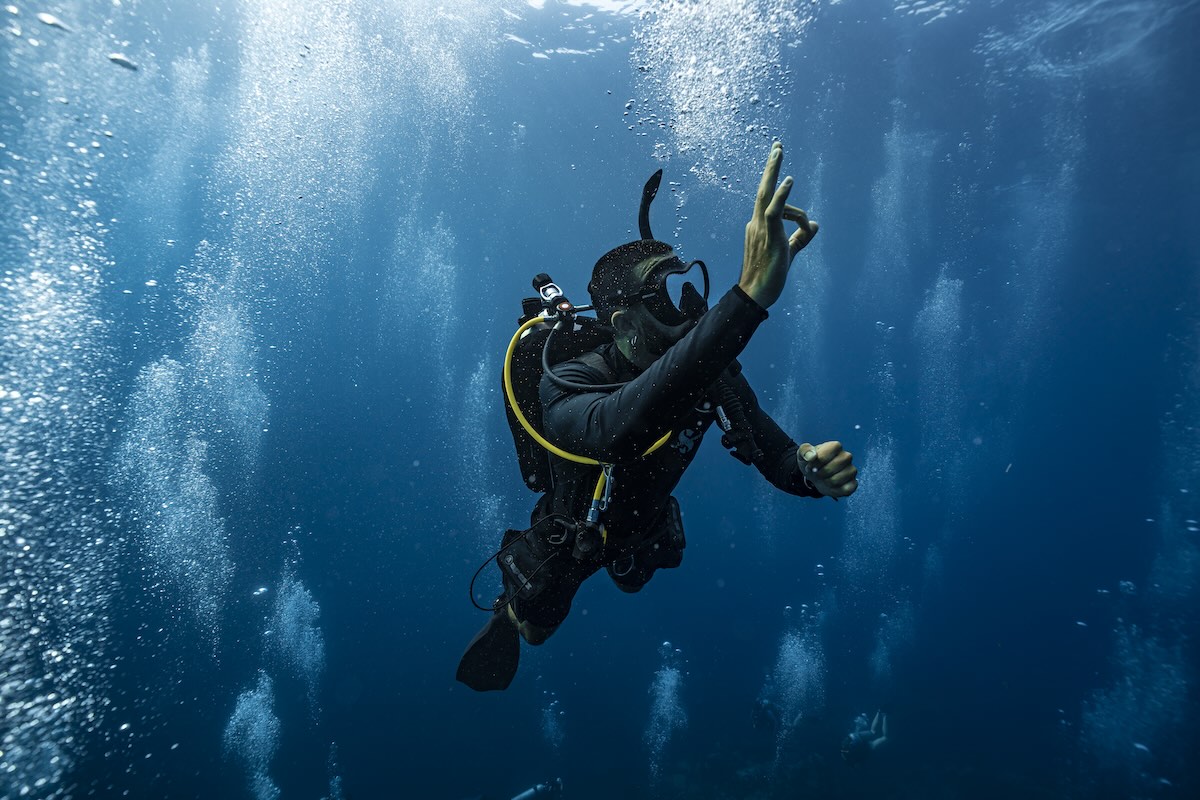
Agree on torch signals before you enter — a large circular motion means OK, rapid side-to-side means attention or problem. These two signals cover the vast majority of night dive communication, and practising them on the surface means they are automatic underwater.
Plan your air more conservatively than you would on a familiar daytime dive. Night diving can increase air consumption slightly for first-timers whose focus elevates breathing rate. Turning the dive at 100 bar rather than 80 bar gives you comfortable reserve for a relaxed ascent and safety stop.
During the Dive
Stay within arm’s reach of your buddy and within easy torch-signal distance of your guide at all times. If you become separated from your buddy, stop, look and listen for thirty seconds. If no contact is made, ascend slowly, surface safely, inflate your BCD and signal the boat. Do not search the reef alone.
Keep one hand available throughout. Resist the temptation to carry cameras or extra items on your first night dive — one hand holds your torch and the other manages buoyancy, communication and any unexpected situations. There will be plenty of opportunity for underwater photography once you are comfortable in the dark.
The Role of Dive Guides in Night Diving
A good dive guide transforms a night dive from an experience into an education. At Isla Tortuga Divers, our night dive guides are naturalists who know White Rock after dark as well as they know it in daylight.
They know how to approach marine life in darkness without disturbing it, how to illuminate a subject without startling it, and how to share a single torch signal with a group of four divers so that everyone sees the cuttlefish before it moves on.
Beyond navigation and safety, your guide is your interpreter of the nocturnal reef. They will point out creatures you would never find independently, and give context that enriches the encounter — knowing that the mucus cocoon around a sleeping parrotfish is a defence against scent-tracking moray eels changes how you look at it.
Your guide carries this knowledge and delivers it in pre-dive briefings, post-dive debriefs and through a torch pointed at the right moment at exactly the right thing.
Preparing Mentally for Your Night Dive
Feeling nervous before your first night dive is not a sign that you should not do it. It is a completely normal response to voluntary uncertainty, and almost everyone feels it.
Almost everyone also reports that it disappears within sixty seconds of descending, replaced by curiosity and a growing sense of wonder. The nervousness is the price of admission. The experience is the reward.
The most useful mental shift is to reframe darkness as intimacy rather than threat. The narrowing of your visual field to the cone of your torch creates a quality of attention that daytime diving rarely achieves.
You are not processing an entire reef simultaneously — you are looking closely at one thing at a time, fully present in a way that the wide-open visibility of a daytime dive can actually work against. Think of it not as diving in the dark, but as diving by torchlight.
Visualise and Let Go
Before you enter the water, run through the dive in your mind. Visualise descending the anchor line, adjusting your buoyancy, following the reef wall, communicating with your buddy.
A mental rehearsal removes uncertainty from the basics, so that when you are actually underwater, none of the fundamental procedures require conscious thought and you are free to simply look at what is there.
Then let go of the expectation. The octopus may or may not appear. The bioluminescence may or may not fire. Going into a night dive with a fixed list of things you expect to see is a fast route to missing what is actually there. Go with curiosity, an open torch beam, and let the reef show you what it has tonight.
Common Myths About Night Diving
Night diving is only for experienced divers
This is the most persistent myth, and it is simply not true. The PADI Night Diver Specialty is open to any Open Water certified diver aged 12 or above.
With a competent instructor, a well-chosen site and proper preparation, a first night dive is entirely accessible to relatively new divers. White Rock’s gentle topography and mild conditions make it one of the best beginner night dive sites in the world.
You won’t be able to see anything
The opposite of the truth. Night diving with a good torch at a productive site like White Rock often delivers more close-up wildlife encounters than a comparable daytime dive. You are illuminating creatures from a metre away and watching their behaviour in extraordinary detail.
Many divers report seeing more species on a single night dive at White Rock than on three daytime dives at the same site.
The marine life is more dangerous at night
Nocturnal marine life is not more aggressive than daytime marine life — in fact, the reverse is often true. Titan triggerfish, the most reliably territorial creature on Koh Tao’s reefs during the day, are completely docile at night. Most nocturnal hunters are focused on their prey, not on divers.
With sensible behaviour — not touching, not cornering, not shining lights directly into animals’ eyes — a night dive at White Rock presents no greater risk from marine life than a daytime dive at the same site.
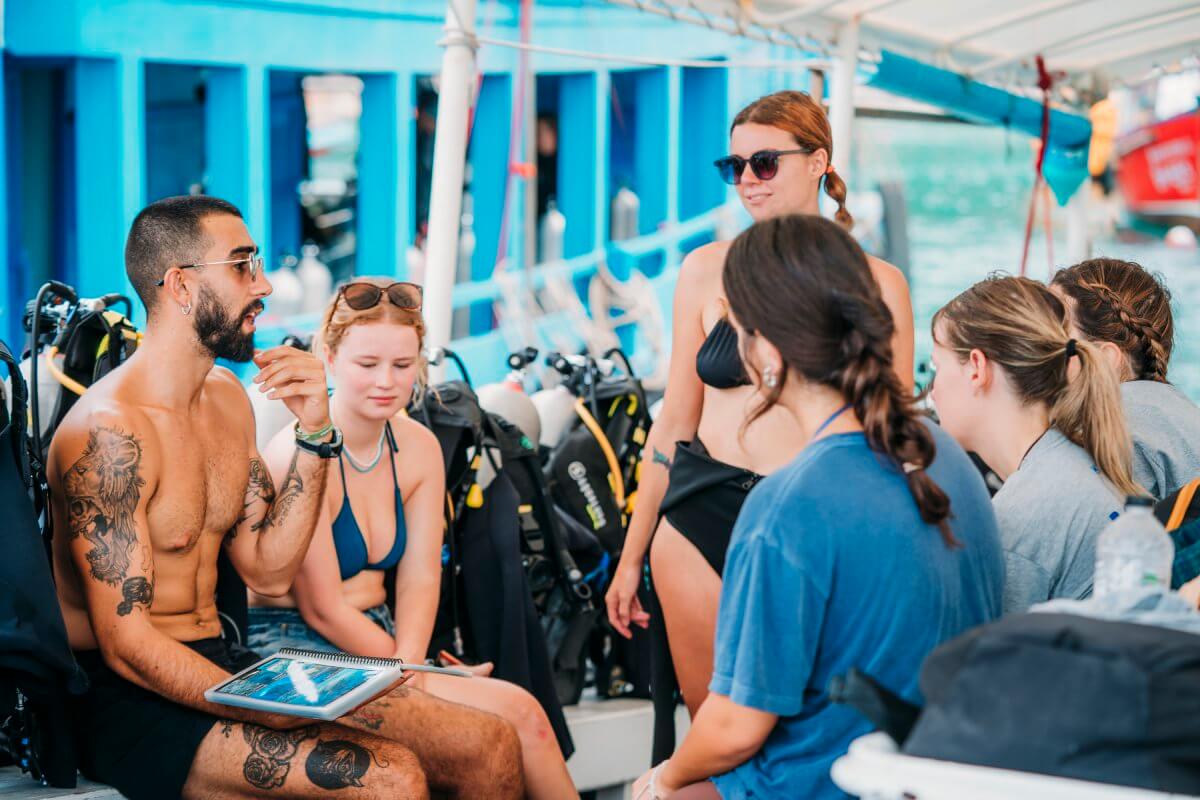
Embrace the Adventure of Night Diving in Koh Tao
Night diving in Koh Tao is the dive that catches people most off guard. It is the experience that seasoned divers who thought they had seen everything describe as genuinely new, and the one that nervous first-timers convince themselves they will merely endure — and then cannot stop talking about for the rest of the trip.
White Rock after dark is not a darker version of the reef you know. It is a genuinely different place, with different inhabitants, different behaviours, and a quality of light that no daytime dive can replicate.
The bioluminescence, the octopus hunting across the rubble, the moray eel gliding in open water, the moment you switch off your torch and the sea comes alive with its own cold fire — these are not things you see by chance. They are things you see by going.
Ready to experience White Rock after dark? Contact the team at Isla Tortuga Divers to book your night dive or enquire about the PADI Night Diver Specialty course. We run night dives throughout the year and keep group sizes deliberately small so every diver gets the experience they deserve.
Written by Lucas Levy @ Isla Tortuga Divers
Award-Winning PADI Platinum Course Director | Isla Tortuga Divers General Manager | Shaping New Divers into Successful Dive Professionals Across Thailand’s Gulf | Conservation Diver Instructor | EN/FR/ES/PT